- Empty cart.
- Continue Shopping

Khatam Kari Kattegat
The Art of Persian Marquetry
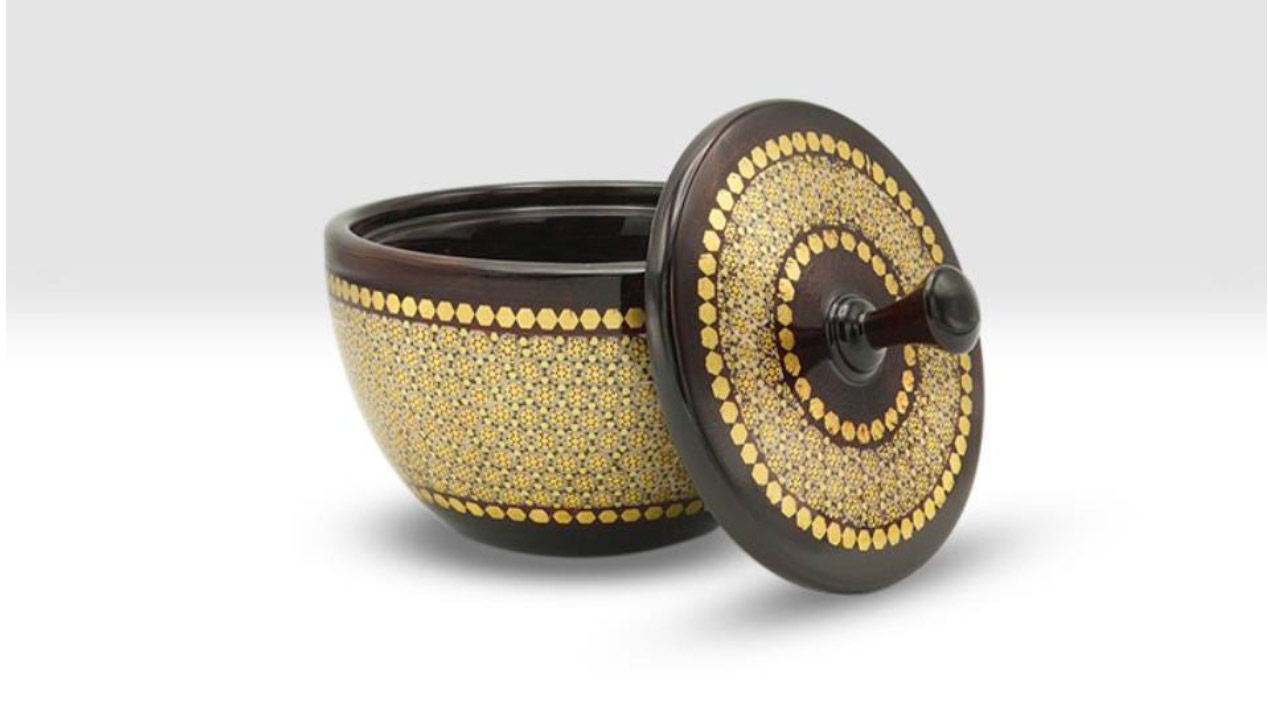
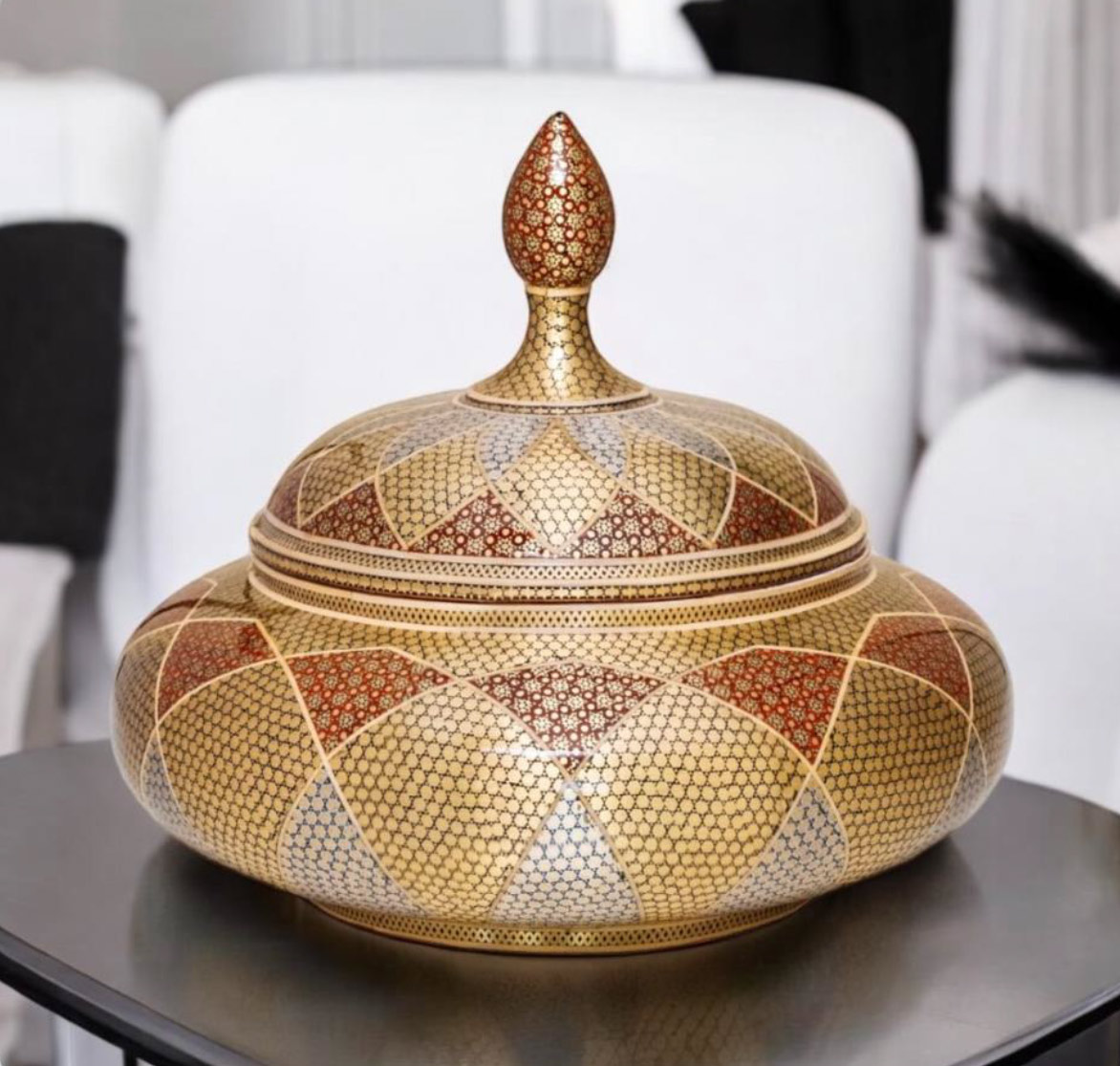
Khatam Kari is one of the most refined and celebrated forms of Persian marquetry, known for its intricate geometric patterns and exceptional precision. For centuries, this craft has represented the pinnacle of artistry, engineering, and aesthetic harmony—making it one of the most iconic expressions of Persian decorative arts.
A Heritage of Excellence
Khatam Kari flourished during the Safavid era and became a hallmark of royal craftsmanship. Master artisans adorned palaces, ceremonial objects, and architectural elements with this detailed inlay technique. Today, the tradition continues in cultural hubs such as Isfahan, Shiraz, and Tehran, where skilled craftsmen preserve the same meticulous methods used for generations.
How Khatam Kari Is Made
Creating a Khatam piece requires precision, patience, and a deep understanding of materials. Each artwork may contain hundreds of tiny pieces arranged into a single square inch, forming perfectly symmetrical patterns.
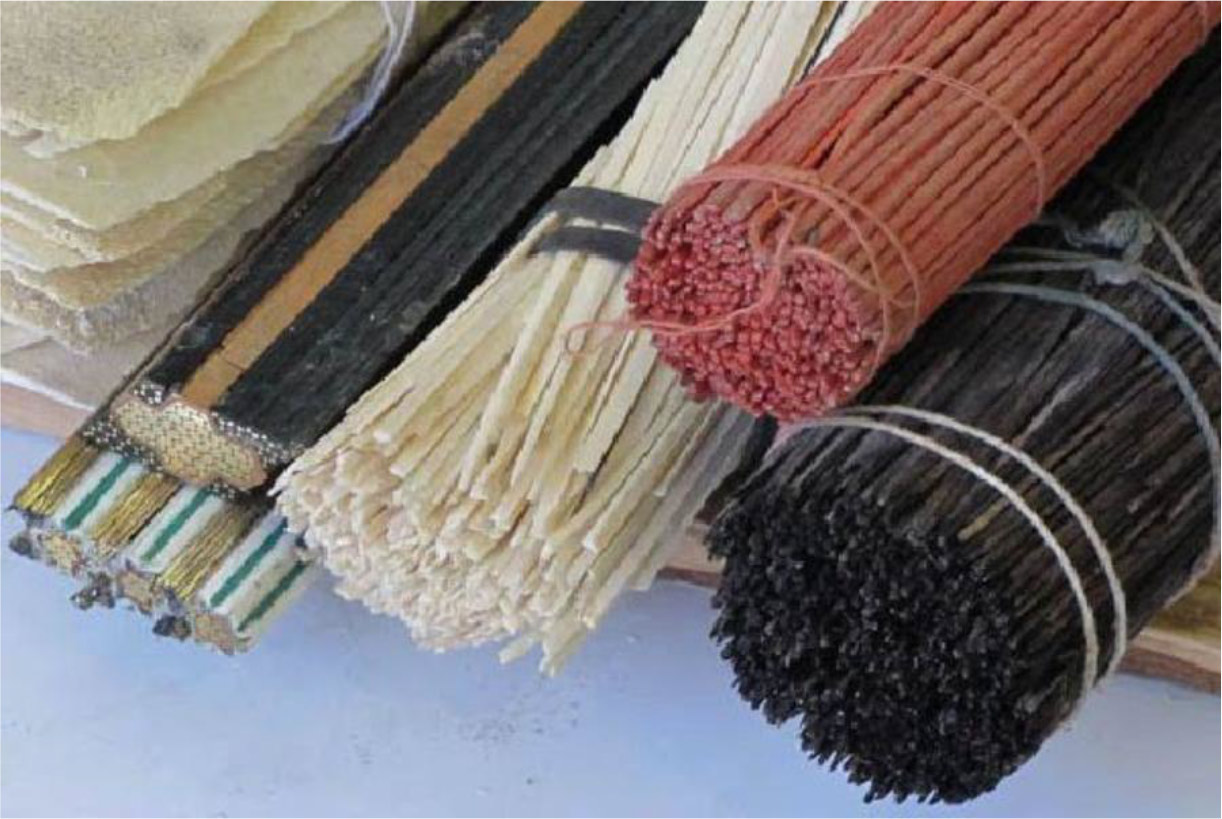
The process includes:
1. Selection of Premium Materials
Artisans choose high-quality materials such as:
• Walnut, ebony, or rosewood
• Camel bone
• Brass or other fine metals
• Occasionally silver or gold for luxury pieces
Each material is selected for its durability, texture, and color.
2. Designing the Pattern
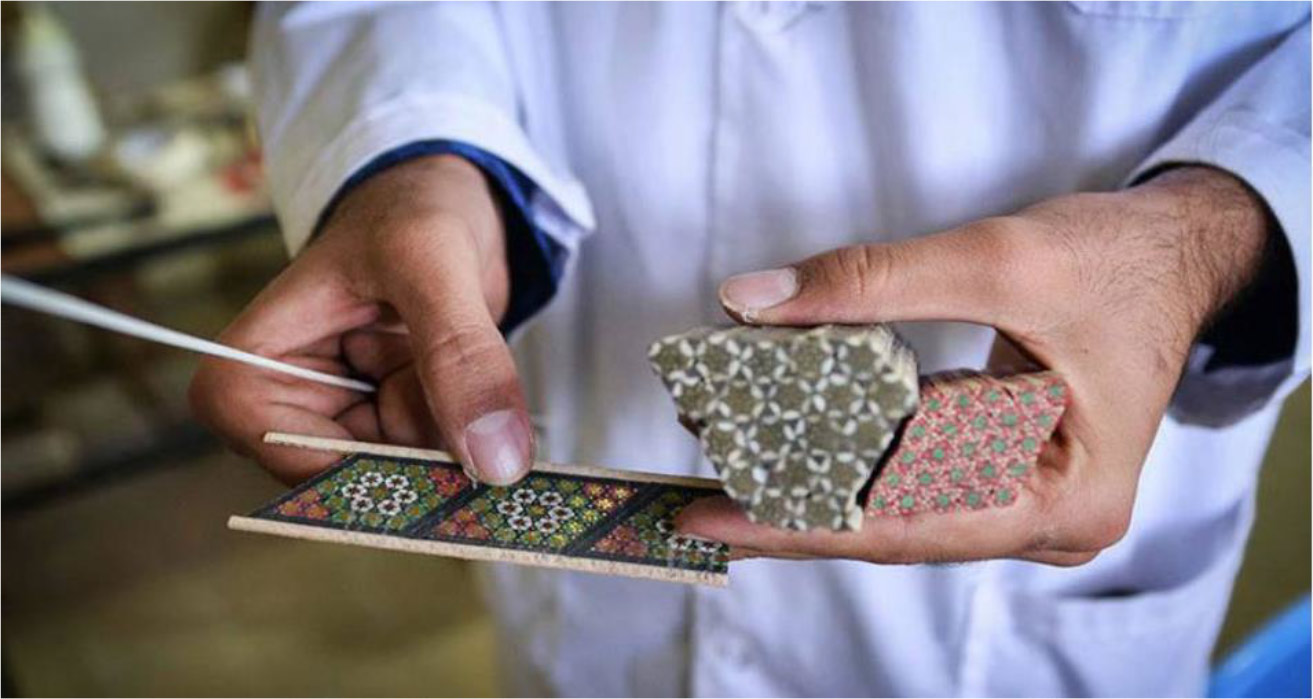
Khatam is known for geometric motifs such as stars, triangles, and hexagons. These designs symbolize harmony, balance, and mathematical precision.
3. Assembly of Micro-Rods
Thin rods—sometimes as small as a millimeter—are crafted from each material. These rods are arranged into tightly packed bundles, forming a unified cylindrical block.
4. Slicing into Veneers
The block is then cut into ultra-thin slices, each revealing the same exact geometric design. This step requires exceptional accuracy to maintain pattern consistency.
5. Inlaying the Surface
The slices are carefully placed onto the surface of the object—such as a box, frame, or decorative item—and fitted seamlessly to create a continuous pattern.
6. Polishing and Finishing
The piece is sanded, polished, and often lacquered to protect the surface and enhance the brilliance of the design.
Modern Applications
While Khatam Kari remains rooted in tradition, it has evolved beautifully into the modern world.
Today, the craft is used in:
• Luxury home décor
• Artistic furniture
• Decorative boxes and frames
• Architectural details
• Custom accessories and personalized gifts
Contemporary artisans combine traditional craftsmanship with modern design, making Khatam relevant to today’s global aesthetic.
Cultural & Artistic Significance
Khatam Kari is more than decoration—it reflects centuries of knowledge, creativity, and cultural heritage. The geometric patterns represent unity, balance, and the interconnected nature of the universe. Each piece is a celebration of skilled workmanship and artistic philosophy.
A Timeless Craft for Modern Living
Whether showcased in traditional objects or contemporary designs, Khatam Kari continues to captivate collectors, designers, and art lovers around the world. Its exceptional detail and cultural depth make every piece a lasting expression of beauty and craftsmanship.